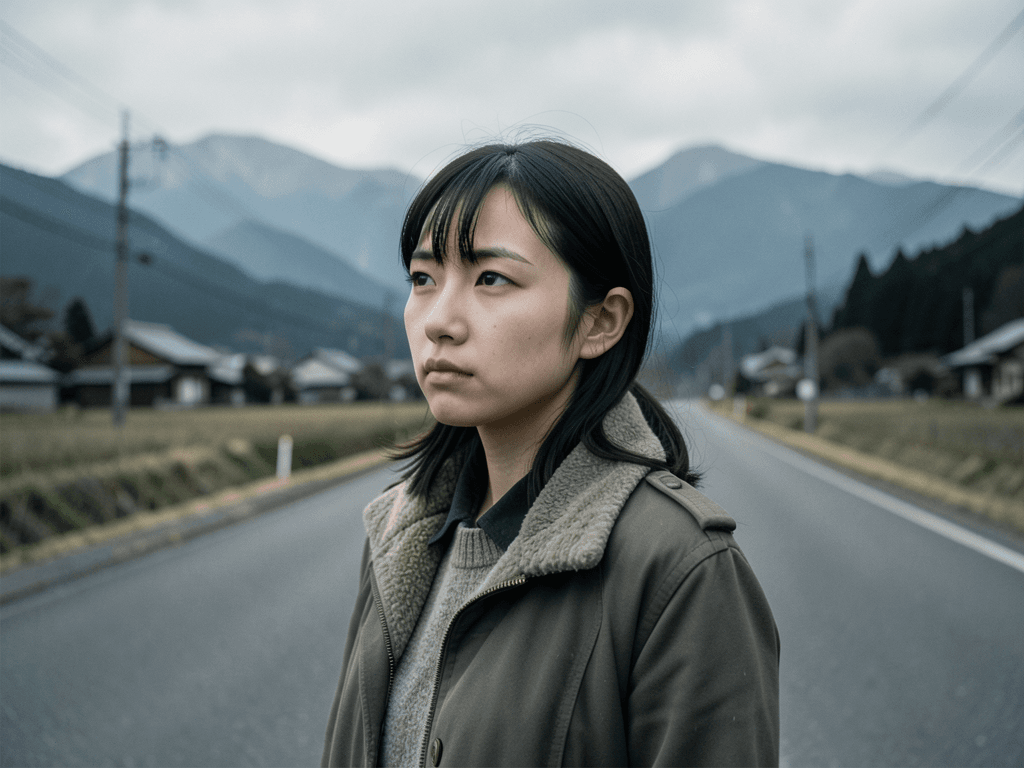

"Country living is the best!"
Every time I see one of those sparkly, picture-perfect posts, part of me feels a little conflicted.
It's been a year since I moved to the countryside. I'll be honest: there are things I regret. Of course, there are also tons of things I'm glad about. But today, instead of those, I want to deliberately talk about the parts that were hard.
Because I don't think it's right to tell people considering a move only the pretty side of the story.
1. I underestimated just how much "you can't do anything without a car"
I knew before moving that "a car is essential." But knowing something and actually experiencing it are completely different.
It's a 15-minute drive to the convenience store. Twenty minutes to the supermarket. Whenever I get a little hungry, or suddenly realize I forgot to buy something, I have to make the call: "Well, I guess I'll drive there."
When I lived in Tokyo, I'd head out whenever the mood struck, think things over as I walked, and before I knew it the shopping was done. That sense of doing things "on the way" has completely vanished out here.
What's more, I have to drive even on rainy days or when I'm not feeling well. And it's always on the days I think "I really don't have the energy today" that I'm out of milk.
The cost of keeping a car isn't trivial, either. Gas, insurance, vehicle inspections—expenses I never had in the city now come up every month. I'd meant to lower my costs by moving, but car-related spending has eaten up a fair amount of those savings.
2. The intensity of the relationships was honestly tough at first
People in the countryside are warm. That's genuinely true. But that warmth threw me off at first.
Within a few days of moving in, a neighbor came by with vegetables from his field. I was happy. But he came the next day too. And the day after that. And before I knew it, conversations like "So what did you do today?" had begun.
Having grown up living in the city, I had a sense of the "right" amount of distance. You greet people, but you don't get too involved. That felt comfortable to me.
In the countryside, that sense of distance sometimes doesn't apply. There's no ill intent at all—quite the opposite, it's pure goodwill. But it took me time to get used to.
"Where are you from?" "Are you married?" "What do you do for work?"
Questions that would feel like "prying" in the city are perfectly normal communication here. Honestly, for the first few months, every conversation slowly wore me down.
3. "Nature is close" also meant "the threats of nature are close"
My image before moving: surrounded by greenery, waking up to birdsong, sipping coffee to the murmur of a river.
The reality: there were so many kinds of bugs that came out in summer that I gave up halfway through trying to look up their names.
Stink bugs, centipedes, hornets, beetles I'd never heard of… Some come into the house, others build nests in the yard. Centipedes especially were genuinely terrifying. Ever since I heard a friend's story about getting bitten, going to the bathroom in the middle of the night became a little scary.
Winter brings its own thing: snow, frost, and ice. There were times my car's windshield was frozen and my departure was delayed by 30 minutes.
I moved here because I love nature, yet I spend my days at the mercy of it. That was unexpected. I came to realize that "living in harmony with nature" takes more physical and mental stamina than I'd thought.
4. Anxiety about work and income lasted longer than I expected
Having moved while working remotely, I figured I could just keep doing my job as before. And for the first six months, that was true.
But little by little, things changed. Company policy reduced the number of remote days, and I had to come into the office a few times a month. Three hours each way. Even just a few times a month, it slowly drained me both physically and financially.
When you try to look for a new job in the countryside, the lack of options is striking. The number of job openings is nothing like the city. Pay levels are lower, too. The worry of "what if I lost my current job" is always tucked away in a corner of my mind.
I now think I should have given far more serious thought to "diversifying my income" before moving.
5. The feeling of no longer having a place to go back to
This was the most unexpected emotion of all.
My family home became distant. My friends are in the city. That casual ease of "I'm tired, let me go see someone" disappeared.
I'm gradually growing to love the place I moved to. But I haven't yet reached the feeling that "this is my hometown." And the places from when I lived in the city are no longer part of my daily life.
A floating, in-between feeling, as if I don't belong anywhere.
I later learned that many people who relocate go through this, but while I was in the thick of it, I panicked, thinking "maybe I'm the only one who isn't doing well." The hardest stretch was probably the first six months or so after the move.
And yet, I don't want to give up on having moved
It may sound strange to say this after laying out five regrets, but still.
I really do love the time in the morning when I sit on the engawa, look at the distant mountains, and drink my coffee. And I can now chat normally with the neighbor who brings me vegetables. I've even built up a little tolerance for bugs (centipedes are still a no, though).
I've come to think that moving isn't "the best choice" or "the worst choice"—it's simply "the way of living I chose."
If you're thinking about relocating right now—
please take stories like this into account, not just the sparkly success tales. Here's someone who, regrets and all, is still sticking with it.
There's no single right answer to relocating, but you can "choose with your eyes open." I'd be glad if this article helped a little with that "knowing."
I'm rooting for your move.