
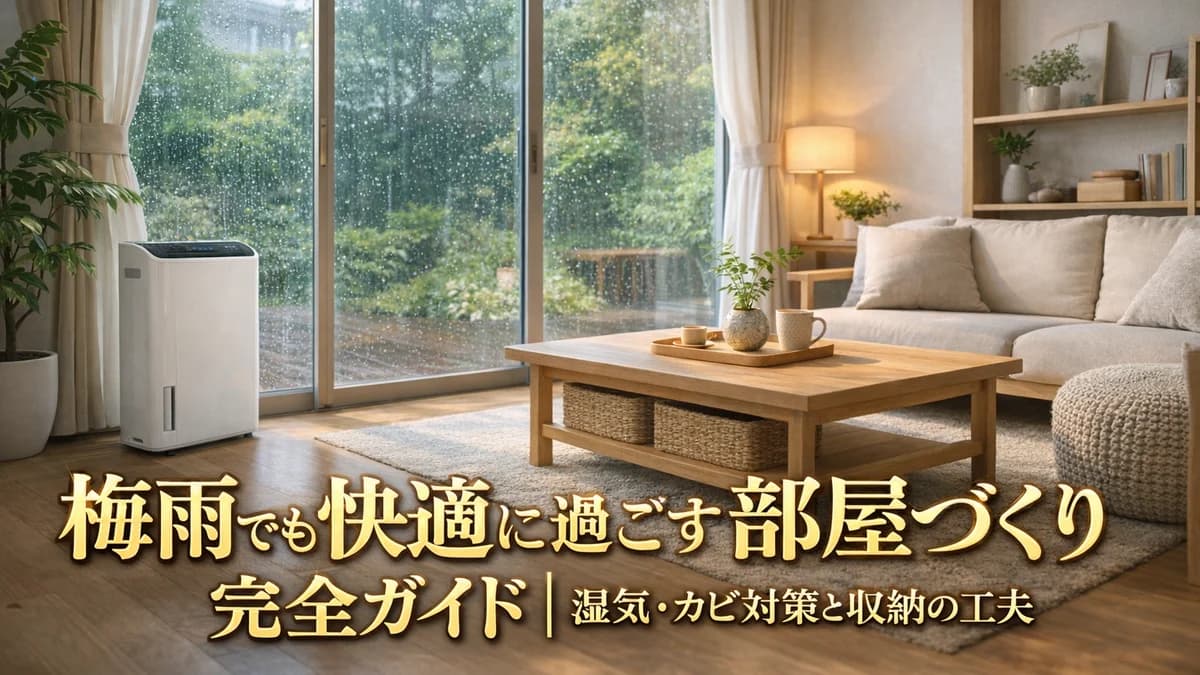

The rainy season comes around every year. The laundry won't dry, the room feels somehow damp, and before you know it there's mold lurking in the back of the closet... But even this gloomy season can become surprisingly comfortable with a few "home-design" tweaks. In this article, we'll introduce humidity and mold countermeasures you can put into practice right away — for everyone from people living alone to households with children — complete with concrete tips on how to use various products.
Why Rooms Feel Unpleasant During the Rainy Season
The true culprit behind the discomfort of the rainy season is, simply put, "humidity." There's a limit to how much moisture the air can hold, and the warmer it is, the more moisture it can carry. During the rainy season, temperatures rise while rain also adds plenty of moisture, so the water content in the air increases all at once.
The humidity considered comfortable is roughly 40–60%. Once it climbs above 70%, you not only feel sticky skin and have trouble sleeping, but mold and dust mites also start to multiply rapidly. Mold begins to become active once humidity exceeds about 60%, and proliferates explosively above 70%. In other words, "keeping humidity at or below 60%" is the single biggest goal of designing your room for the rainy season.
Start by placing a single hygrometer in the room. They're available from just a few hundred yen, and simply making your room's current state "visible" clarifies which countermeasures to prioritize.
The Basics: The Twin Pillars of "Ventilation"
and "Dehumidification"
On Rainy Days, Ventilate in Short, Frequent Bursts
"If I open the windows on a rainy day, won't I just let more humidity in?" is a common question, but in many cases the indoor air, with its trapped moisture, is more humid. Even on rainy days, open windows in two spots for just 5–10 minutes a few times a day to create a path for the air to flow. Opening windows that are diagonally across from each other is the most efficient. If your room has only one window, just opening the entrance door and running the exhaust fan will get the air moving.
On days when the outdoor humidity is extremely high, running your air conditioner's "dry (dehumidify)" mode is more effective than forcing the windows open.
Dehumidify with Your AC Plus a Little Extra
Your air conditioner's dehumidify function is the star of rainy-season countermeasures. The difference from cooling is that cooling prioritizes "lowering the room temperature," while dehumidifying prioritizes "lowering the humidity." Use dry mode on chilly days and cooling on hot, muggy days, and you'll stay comfortable.
For rooms or closets the AC struggles to reach, combine a compact dehumidifier or standing desiccant. Dehumidifiers come in compressor types (strong in the rainy season and summer, energy-efficient) and desiccant types (lightweight, usable in winter too); for rainy-season countermeasures, we recommend the compressor type.
Concrete Humidity Countermeasures by Area
Humidity doesn't accumulate evenly throughout a room — it concentrates in spots where the air stagnates. Watch out for places that are "closed, cramped, and low."
Closets and Storage Spaces
Storage crammed full of clothes and bedding has no air movement, making it a breeding ground for humidity.
- Fill storage to "no more than 80%," leaving gaps to create paths for air to flow
- Place one standing desiccant each in the back and the front (the back accumulates more)
- Lay down slatted boards to create space between the floor and your belongings
- On clear days, leave the doors wide open and send air with a fan
It's an iron rule to store clothes only after they're completely dry. Even slight dampness causes mold and odor.
Entryway and Shoe Cabinet
Shoes have absorbed sweat, and an enclosed shoe cabinet tends to trap humidity. Don't put your shoes away right after taking them off — let them dry overnight, and keep desiccant and newspaper in the shoe cabinet. Open the doors to ventilate a few times a month.
Wet Areas Like the Kitchen, Washroom, and Bathroom
These are the areas most prone to mold. Wipe up water droplets after use, and run the bathroom exhaust fan for several hours after bathing — or, as a final step, splash cold water on the walls to lower their temperature, which makes mold less likely to grow. Hanging items like shampoo bottles rather than placing them directly on the floor is also effective for preventing slime.
Bedroom and Bed
People sweat about a cupful while sleeping. The underside of mattresses and futons easily traps humidity, so take measures like using a slatted bed frame, standing your futon up when not in use, or laying down a moisture-absorbing sheet. Once a week, lift your futon and dry out the side that was in contact with the floor.
How to Choose and Use Dehumidifying Products
Off-the-shelf dehumidifying products have no waste if you choose "the right product for the right place."
- Standing tank-type desiccant: For cramped, enclosed spaces like closets and shoe cabinets. An inexpensive type you replace once water collects.
- Sheets and silica-gel types: Under futons or in drawers. The reusable, regenerating type is economical.
- Newspaper and baking soda: Inside shoes and around the fridge. Baking soda doubles as both a dehumidifier and a deodorizer.
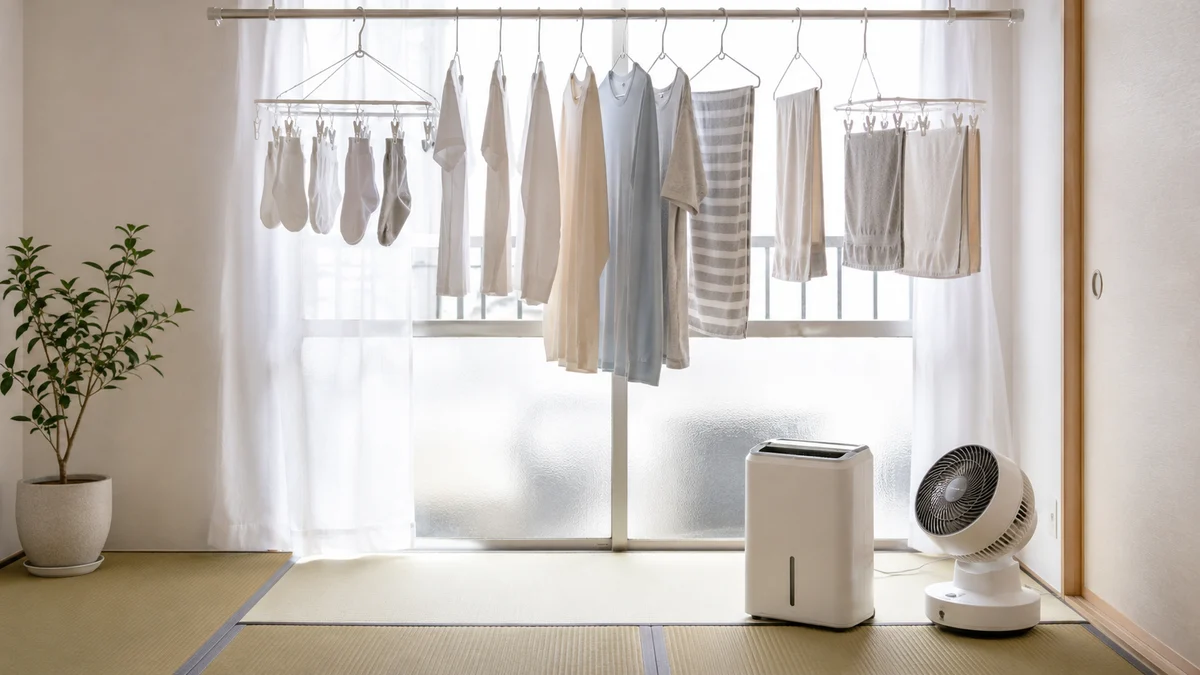
- Circulators and fans: Actually the most powerful humidity countermeasure. Simply moving the air dramatically reduces condensation and mold. It also shortens the drying time for indoor laundry.
Circulators in particular are a rainy-season essential. Combine one with a dehumidifier and direct the airflow at your laundry, and you'll greatly suppress the half-dried smell characteristic of drying clothes indoors.
Cleaning and Habits That Keep Mold from Growing
It's many times easier to keep mold from growing than to remove it after it appears.
- Wipe up condensation as soon as you spot it (windows, walls, behind furniture)
- Place furniture about 5 cm away from walls so air can pass behind it
- Once a week, give wet areas a spritz of alcohol spray as prevention
- Keep odor-producing spots like trash cans and drains clean frequently
If mold does appear, wipe away light cases with alcohol, and for spread cases such as rubber gaskets, use a chlorine-based mold remover. Ventilate thoroughly and don't forget rubber gloves and a mask.
Interior Tips to Make the Rainy Season "Pleasant"
Beyond the practical side, designing a room that lifts your mood is also a trick to getting through the rainy season.
- Color choices: Incorporating cool colors like blue and green into cushions and fabrics makes things feel visually refreshing.
- Lighting: On cloudy days that tend to be dim, adding warm-toned indirect lighting makes the space more comfortable.
- Houseplants: Some plants can be expected to help regulate humidity, and they're soothing to look at too. Just be careful not to let water pool in the saucer.
- Scent: Using aromas with antibacterial and anti-mold properties (tea tree or eucalyptus) can refresh your mood as well.
- Indoor drying space: Creating a fixed spot to dry laundry without making it look cluttered — using a tension rod or a folding indoor drying rack — makes life comfortable.
Summary
There's just one key point to designing a comfortable home for the rainy season: "keep humidity at or below 60%." To do that:
- Grasp your current situation with a hygrometer
- Exchange the air through frequent ventilation and AC dehumidification
- Focus your care on humidity-prone spots like closets, wet areas, and the bedroom
- Cleverly combine dehumidifying products with a circulator
- Stick thoroughly to preventive habits that keep mold from growing
Every one of these is something you can start today. Rather than being pushed around by the dampness, let's turn the rainy season into a pleasant time of year with a few small tweaks.