

The FIFA World Cup 2026, staged across North America (the United States, Canada, and Mexico), finally kicked off on June 11. With a record 48 nations participating and all 104 matches, this colossal tournament is proceeding while rewriting much of soccer's conventional wisdom. From Japan's dramatic opening match, to the record-breaking prize money, to the "drinking water break" that arrives without fail during every match—here's a rundown explaining what's happening at the tournament right now, aimed at you, the soccer fan. (The results in this article are as of June 15, 2026.)
Japan Opens With a Fierce 2-2 Draw Against the Netherlands
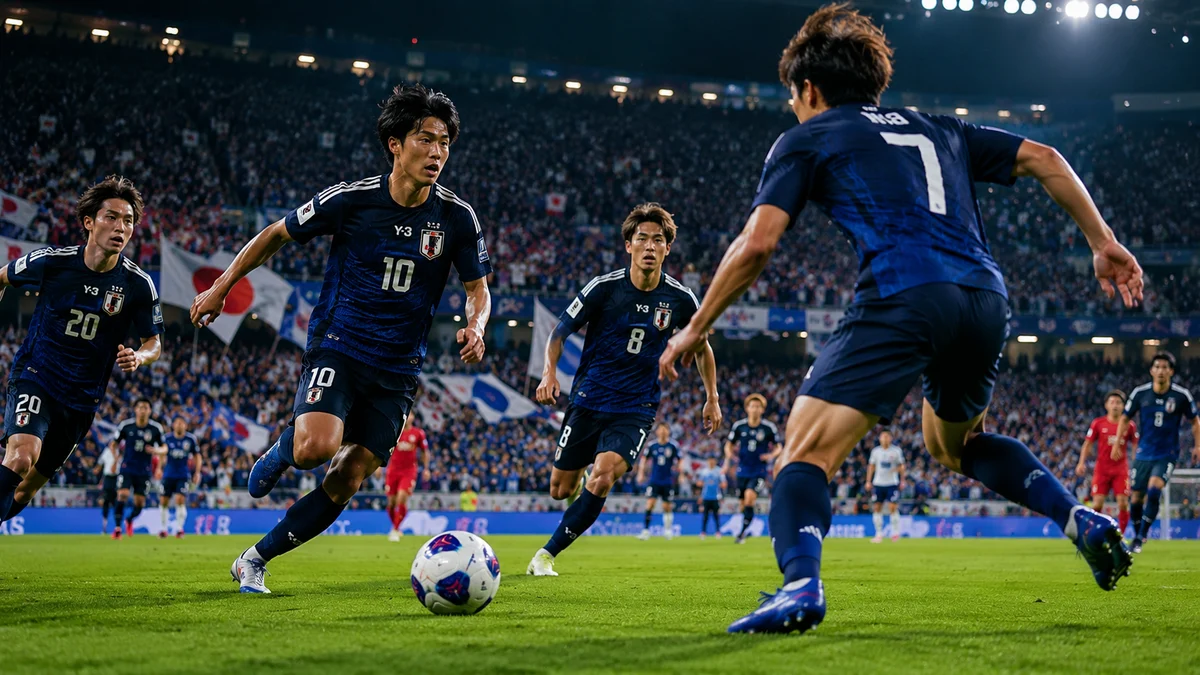
For Japanese soccer fans, the opening of this tournament became a stream of unparalleled tension and joy. The opponent in the Group F opener was the Netherlands, one of the title favorites. Facing a squad of world-class talent, Japan was forced into a grueling match in which they fell behind twice.
Even so, the Samurai Blue didn't break. In the closing stages of the second half, it was Daichi Kamada who, in the eleventh hour, slammed home an invaluable equalizer. With a goal of sheer determination, he pulled the score back to 2-2 and wrested a precious point off a powerhouse. The resilience to twice claw back signaled a maturity different from the Japan that had previously been called "a good loser." Not hanging their heads even after conceding first, refusing to fall apart as an organized unit, and turning to the counterattack—their bearing exuded the confidence of a team that has built up years of experience.
Japan landed in Group F alongside the Netherlands, Tunisia, and Sweden. It's by no means an easy group, but the significance of taking a point off the Netherlands in the opener is enormous. In the same group, according to reports, Sweden is said to have won big against Tunisia, and the battle over points and goal difference looks set to heat up already.
Considering realistic scenarios for advancing, Japan's remaining matches against Tunisia and Sweden become extremely important. Since this tournament leaves open the possibility of even third place in a group advancing to the Round of 32, they'll want to aim for at least one win, and ideally two. The single point gained against the Netherlands should slowly come into play in the final standings battle. Conversely, if they drop points here, whether they can benefit from the new rule of "third place but among the top 8 teams" becomes a contest on the thin tightrope of goal difference. A battle continues in which they can't afford to relax for even a single match.
48 Nations, 104 Matches—The Shape of the Tournament Has Changed Dramatically
The biggest topic of this tournament is that the number of participating nations expanded all at once from 32, as in previous editions, to 48. This is the largest-scale format change since the 1998 France tournament, and the base of soccer as a "world tournament" has broadened dramatically at a stroke.
Under the new format, 48 teams are divided into 12 groups of four teams each. In addition to the top two teams in each group, the eight best-performing third-place teams advance, for a total of 32 teams progressing to the newly established "Round of 32." In other words, even finishing the group stage in third place leaves open the possibility of surviving into the knockout stage, depending on your performance. This design reduces dead-rubber matches and keeps the chance to advance open for every team until the very end.
The number of matches also surged from 64 to 104. From the opening to the final, over roughly 40 days from June 11 to July 19, fierce contests unfold day after day in cities across the three North American nations. In the tournament's opening match, Mexico vs. South Africa, Mexico's Julián Quiñones recorded the memorable first goal of the tournament in the 9th minute. Many goals were already being scored in the early stages of the tournament, and attacking, watchable matches continue.
On the other hand, the 48-nation format has its share of pros and cons. While there's the philosophy of "the dream stage for more countries," concerns have also been pointed out: "won't there be more matches with a gap in ability?" and "won't the schedule drag on?" Including how the rule that even third place can advance changes the gamesmanship of the final group matches, whether this new format is judged a success is being put to the test in this very tournament. For fans, there's also the added enjoyment of seeing more matches for their country of interest, and witnessing the dynamism of nations that previously had no connection to the main tournament.
A Tournament of Massive Travel Spanning 3 North American Nations and 16 Cities
This tournament spans three nations—the United States, Canada, and Mexico—with matches held in a total of 16 cities. Co-hosting a single tournament across three countries is an exceptionally large scale even in World Cup history. The United States handles the majority of matches, while Mexico stages games in Mexico City, Guadalajara, and Monterrey, and Canada in Toronto and Vancouver.
The stage for the opening match was Mexico City's legendary holy ground, Estadio Azteca. The stadium that has produced countless famous scenes—including Maradona's "five-man dribble"—welcomed its third World Cup. And the tournament's finale, the final on July 19, will be held at MetLife Stadium in New Jersey, near New York.
There are also caveats unique to a three-nation tournament. The travel distances across countries are long, and the differences in time zones and climate are significant. There are cool Canadian cities and scorching southern cities, and in high-altitude Mexico City, the thin air also has an effect. How teams maintain their condition under these grueling circumstances becomes a hidden key to surviving the long haul. The mandatory hydration breaks described later are not unrelated to this "battle against the environment."
Record-Breaking "Prize Money"—50 Million Dollars for Winning
The scale didn't expand only in the number of matches. The prize money, which draws the interest of players and fans, also dramatically broke its all-time record.
The total prize money FIFA prepared for this tournament is about 871 million dollars (on the order of 135 billion yen). Given that the total for the previous 2022 Qatar tournament was about 440 million dollars, this represents an astronomical increase of roughly double in just four years. Behind it lie the rise in participating nations from 32 to 48, and the sharp increase in the number of matches.
What's most noteworthy is the winning team's share. The nation that wins this tournament will be awarded a record 50 million dollars (roughly 7.8 billion yen at 155 yen to the dollar). Compared to the roughly 42 million dollars Argentina received for winning the Qatar tournament, it's been further increased. The runner-up gets 33 million dollars (about 5.1 billion yen), third place 29 million dollars, and fourth place 27 million dollars—the higher you finish, the more the amount leaps up.
What you can't miss is that even "just participating" earns a large reward. The 48 nations that competed in the main tournament are each allocated at least about 9 million dollars (about 1.4 billion yen) per team. With more participating nations, substantial funds will now reach countries that previously couldn't stand on the world stage, and from the standpoint of promoting soccer in each nation, the significance of this tournament is great. Distribution money to national teams is often reinvested in that country's youth development and league infrastructure, and in the long run it leads to raising the overall level of world soccer. The enormous prize money adds even more weight to each and every match on the pitch.
A First in History: The "Drinking Water Break"
Made Mandatory in Every Match
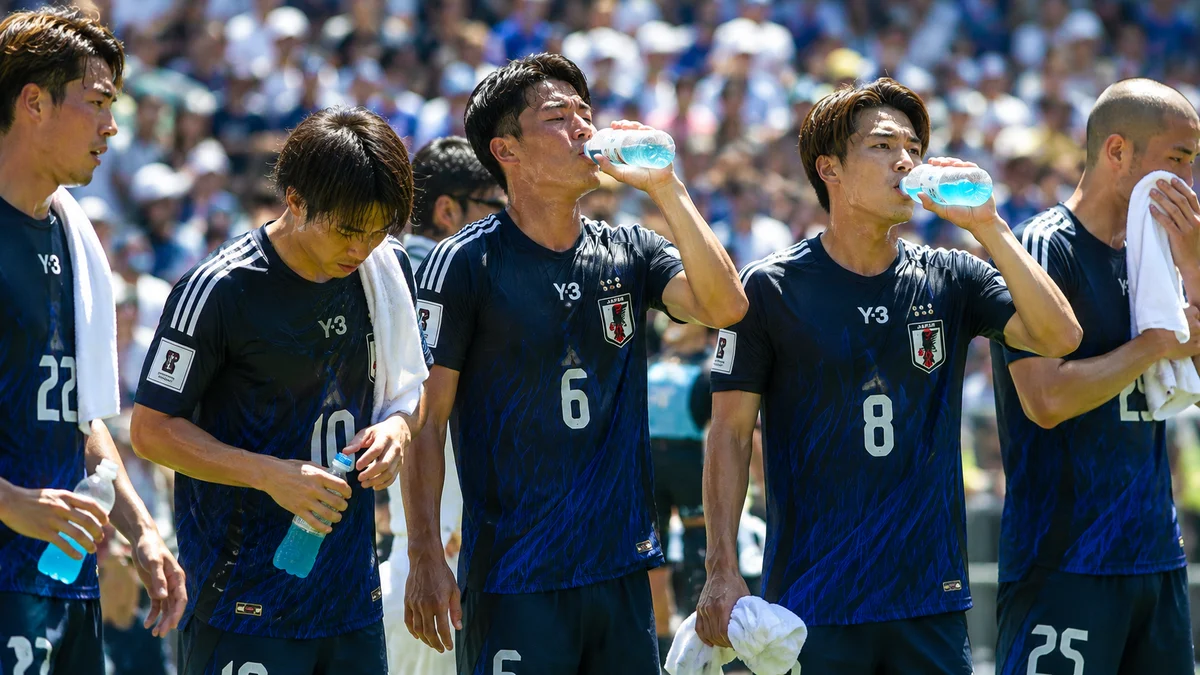
And one more thing that has changed greatly from this tournament: the "drinking water break (hydration break)" set up during matches. Watching the broadcasts, some viewers may have thought "huh?" at the scene where play stops once partway through each half.
In this tournament, FIFA made it mandatory to set up a 3-minute hydration break around the 22nd minute of each half. This is the first time in World Cup history it has been introduced on a "mandatory, all-match" basis. The math works out to two breaks per match across both halves, securing roughly 6 minutes of hydration time in total, separate from halftime.
The point is that, regardless of weather or temperature, it is always carried out even for matches in indoor (domed) stadiums. In fact, stoppages for hydration were first introduced at the 2014 Brazil tournament, but at the time they were an "exceptional measure" carried out only when the heat index (WBGT = a heatstroke risk indicator calculated from temperature, humidity, solar radiation, and so on) exceeded a certain level. In this tournament, it has been upgraded to a "permanent rule" built into all matches regardless of weather conditions.
The background is the harsh summer heat and humidity of North America. In day games (held during daytime), players' physical exhaustion is severe, and the risk of heatstroke can't be ignored. Players replenish fluids, cool their bodies, and managers re-convey tactics—these few minutes play an important role in maintaining condition and protecting the quality of the match.
Viewed tactically, this hydration break can be called "another halftime." For a team whose flow is poor, it becomes a chance to regroup; conversely, for a team riding momentum, it can be a moment that throws cold water on them. What instructions a manager gives in these 3 minutes, whom they call over and what they convey, may at times sway the development of the second half. Meanwhile, broadcasters are permitted to air commercials during this stoppage, making it a new rule with a commercial side as well. Spectators, too, can enjoy matches more deeply by being conscious of how this hydration break affects the flow of play and substitution strategy.
Conclusion—Let's Witness the Tournament of "Change"
Expansion to 48 nations, the long haul of 104 matches, record prize money, and a hydration break mandated for every match. World Cup 2026 is, as a competition and as an operation, a tournament packed with many "firsts"—truly a turning point.
On that grand stage, the Japan national team pulled off a confident draw against the powerhouse Netherlands. The group stage has only just begun. How far Japan can climb in the battles from here, and what kind of drama the renewed World Cup will produce. Let's not miss a single match of this summer when history moves, and become its witnesses.
- The results and standings in this article are as of June 15, 2026. Since match results and standings are updated daily, please check the latest information on official sites and elsewhere.