

SUNO, the biggest name in AI music generation, has announced a major change to how downloads work. On the surface, it isn't a price increase to the plans themselves. But read the details and it amounts to what is effectively a steep price hike.
What SUNO's "download limits"
actually are
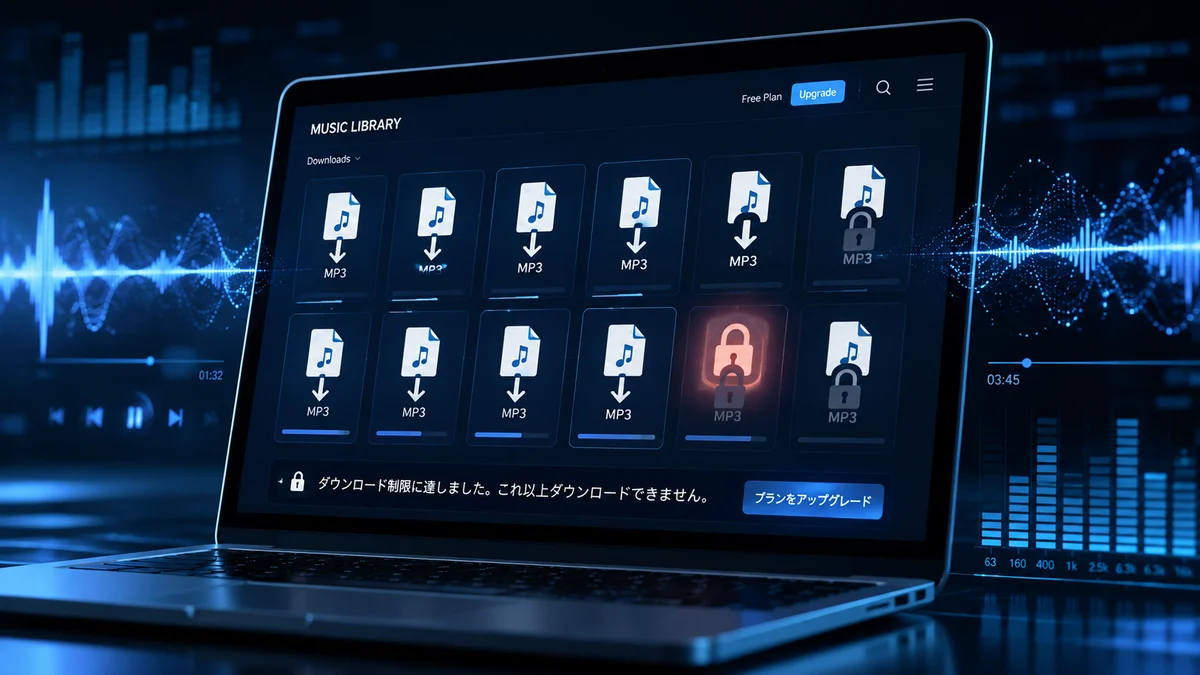
Starting September 3, 2026, SUNO is capping the number of downloads per plan. The free plan gets 7 downloads for life, the $8-a-month Pro plan gets 20 per month, and even the top Premier plan gets only 60 per month. Unlimited downloads beyond the cap are available only when Premier subscribers additionally download through "Suno Studio," a professional stem-editing feature. What's more, the limits apply retroactively to songs created before September 3 that you download later.
There is one relief: downloading all the stems for a single song — vocals, instrumental and so on — counts as just one download. But the structure remains the same: you can generate test tracks as much as you like, while the number of times you can download the "final song" you'll actually release is extremely limited. Generation is free; turning it into a product is restricted. It's fair to call this a price hike in disguise.
The official reason and the real one — what lies behind "fighting mass production"
Officially, SUNO says this is a measure against streaming services being flooded with carelessly mass-produced AI songs. But that logic is a stretch. Accusations of copyright infringement over the sources of the music the AI was trained on — YouTube, for example — have persisted for a long time, and it's easy to imagine the costs arising from lawsuits with major labels and the licensing deals and settlements that followed. Capping downloads themselves and recovering the excess through extra charges is most naturally seen as a way to collect the funds for paying rights holders thinly and widely from users.

Craftsmanship and the fate of "copies"
This isn't limited to AI music. Those of us involved in making things have experienced it again and again: the better the idea, the faster imitations flood the market and take away the profits we should have earned. The patent system is supposed to exist to prevent such imitation, but in reality it barely works. If that's the case, perhaps the arrival of an era in which "anyone can easily make music without any special skills" was also an unavoidable trend in terms of industry structure.
UDIO as an alternative, and how it compares with SUNO
The other major player, UDIO, used to be free to use. But at some point it suddenly became paid, and it leaves a strong impression of being somewhat inferior to SUNO in performance. Since the copyright issues came to the surface, it hasn't shipped any notable updates. Its name comes up as a place to switch to in response to SUNO's stealth price hike, but for now it has to be said that it lacks a decisive edge.
"No need for new artists"
and the parallel with the film industry
If music becomes something anyone can make, the very meaning of the professional artist is called into question. In fact, a very similar change is happening in the world of video. With the arrival of highly accurate video-generation AI, people are starting to question whether big-budget blockbuster films are needed at all.
Isn't the music industry standing at the same crossroads? How services like SUNO and UDIO will evolve from here, and what pricing they'll settle on — I'll keep watching closely.